Food experience
Ultra-Orthodox Jerusalem: Food & Community
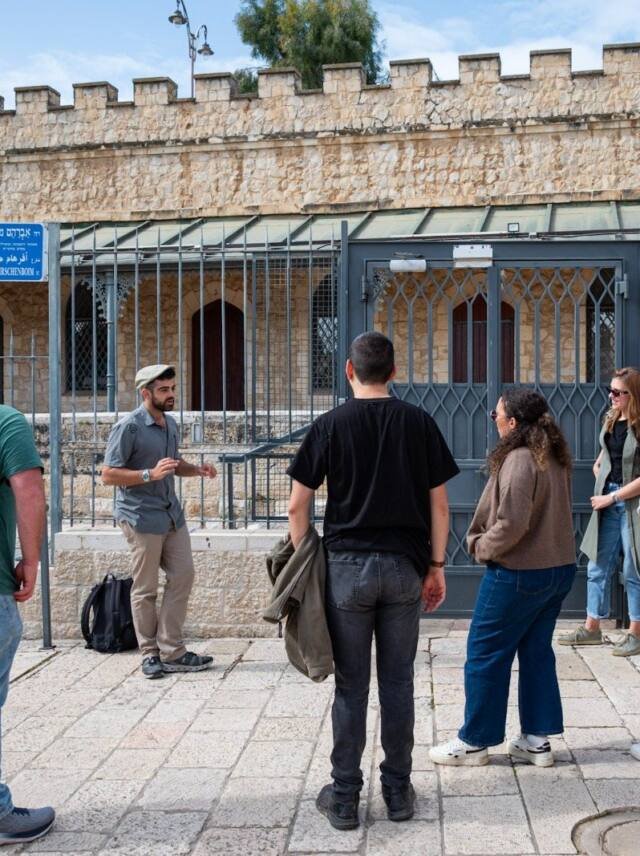
Across the street from Machane Yehuda is a Jerusalem most visitors pass without entering. This tour goes in, to meet the Haredi (ultra-Orthodox) community on its own terms, and to eat the Ashkenazi cooking that came with it from Europe.
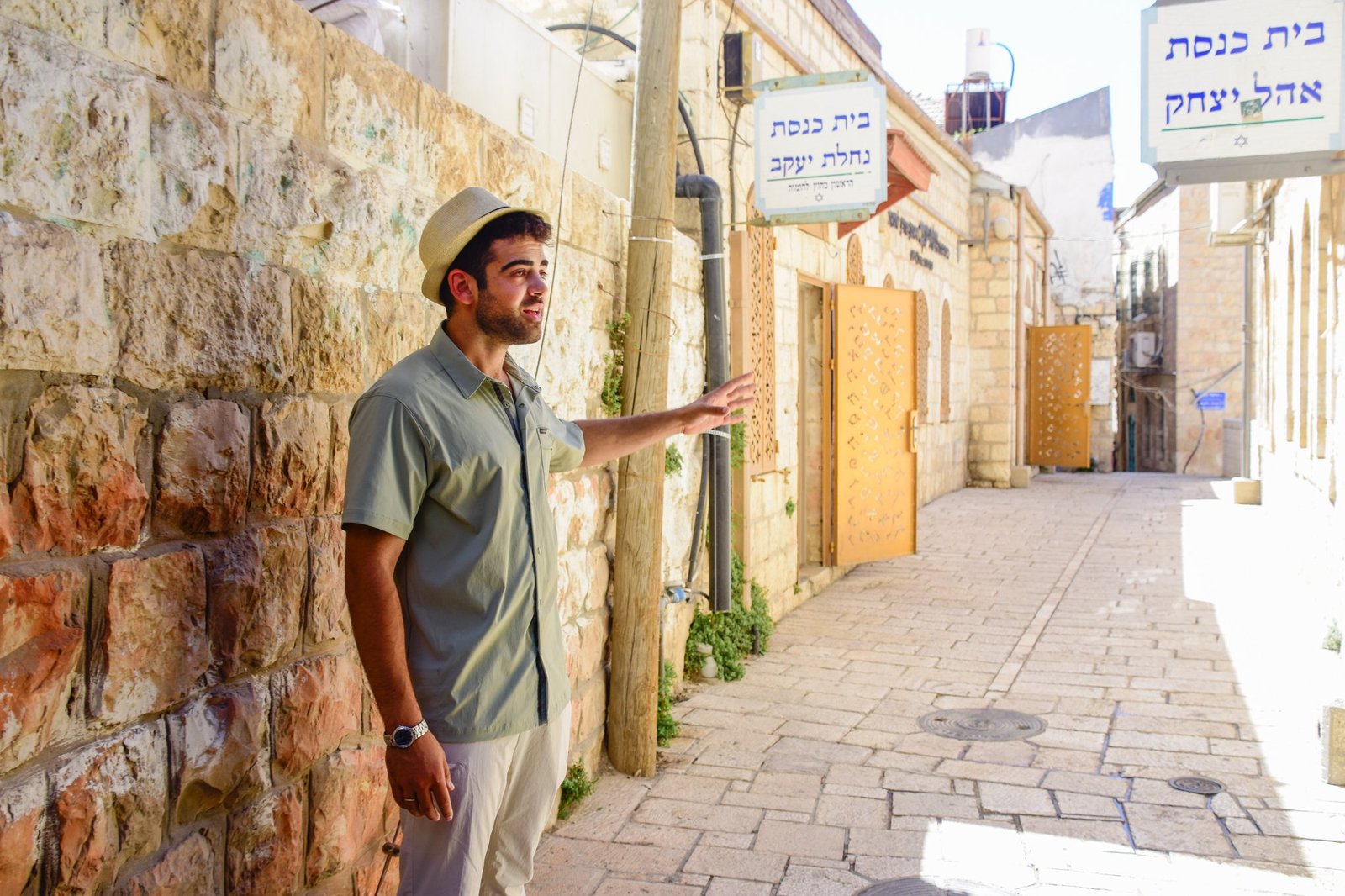
Just across the street from the colorful bustle of Machane Yehuda Market lies a Jerusalem that many people pass every day, but few truly get to know.
Step into the streets and courtyards of Jerusalem’s Haredi neighborhoods — Geula, Mea Shearim and the lanes between them — and explore the traditions, communities, and rhythms of daily life that shape this unique part of the city. Through stories, encounters, and food, we’ll look beyond the familiar black hats and clothing to better understand the different communities within Haredi society, their beliefs, customs, family life, and relationship with modern Jerusalem.
And, of course, we’ll taste our way through the neighborhood with classic Ashkenazi Jewish foods: Jerusalem kugel, cholent, rugelach, schmaltz herring, and more. A fascinating combination of culture, history, religion, and traditional Jerusalem food.
What “Haredi” actually means
Haredi — you will also see it spelled Chareidi or Charedi — is the word the community uses for itself. It is usually translated as ultra-Orthodox, a label applied from outside and one that flattens an enormous amount of internal variety. There are chassidic courts and there are Litvish yeshiva communities. There are Sephardic Haredim whose customs and food are entirely different from their Ashkenazi neighbors two streets away. There are people who work in high-tech and people who learn full time. Treating all of it as one bloc is the single most common mistake visitors make, and correcting it is most of what this tour is for.
We start there, because the food does not make sense otherwise. A Jerusalem kugel is not just a dish. It is a marker of who cooked it and where their grandparents came from.
What you eat
Jerusalem kugel is the signature. Caramelised noodles with an aggressive amount of black pepper: sweet and sharp at the same time, which sounds wrong and is not. It is a specifically Jerusalem dish and does not travel.
Cholent is the slow-cooked Shabbos stew, kept overnight because cooking is not permitted on Shabbos itself. Every family makes it differently and every family is certain theirs is correct. Mid-week you can eat it at a counter; the Thursday-night version is a genuine local institution.
Rugelach — the chocolate ones, still warm, are the thing people fly back for. There is a long-running argument about which bakery has the best, and we will not settle it, but we will collect evidence.
Schmaltz herring is the acquired taste on the list, and the one that most reliably separates the group. Cured, oily, served with raw onion and often with a small glass of something. It is a direct line back to Eastern Europe.
Depending on the season and the group, we add kokosh cake, fresh challah, Yemenite jachnun or malawach, and whatever the neighborhood bakeries are doing well that week.
The part that is not food
Between stops we talk about how the community is actually structured: the role of the rebbe, why the yeshiva system looks the way it does, how families manage on the incomes they have, what military service means here and why it is the most contested question in Israeli public life. We talk about the differences between chassidim and Litvaks, about Sephardic Haredi society, and about the parts of the picture that Israeli media and foreign coverage both tend to get wrong.
Questions are welcome, including the awkward ones. Coming in with genuine curiosity gets you a great deal further here than coming in with a position.
Practical notes
Modest dress is essential, and this is the tour where it matters most. Knees and shoulders covered for women, and a skirt rather than trousers is appreciated in the residential areas. Men should have shoulders covered and a head covering available. This is not a museum; people live here.
Photography requires care. Do not photograph people, and particularly not children, without asking. In some streets it is better not to have the camera out at all. I will tell you where.
Everything on the route is fully kosher, and much of it is badatz. Allergies are accommodated with notice.
Timing matters more here than on any other tour. Nothing runs on Shabbos, from Friday afternoon through Saturday night. Thursday is the most alive. During the three weeks before Tisha B’Av and other periods of communal mourning the atmosphere changes considerably, and we adjust the route accordingly.
Comfortable shoes: the streets are stone, uneven, and wet in places.
Who it suits
Companies and communities looking for something with real substance. Families, including those with teenagers. Visitors with Haredi relatives who want to understand the world their cousins live in. Jewish visitors from abroad who have opinions about this community and have never actually spent an afternoon inside it: that group in particular tends to leave with the opinions rearranged.
- Tastings may include
- Jerusalem kugel, cholent, rugelach, schmaltz herring and other classic Ashkenazi dishes
- Swapping options
- The tour can be booked without food tastings