Private day tour
Jerusalem: The Abrahamic Religions
The Old City through the eyes of the three Abrahamic faiths — Jewish, Muslim and Christian — asking not only what happened here, but why Jerusalem became sacred to billions, and why the situation is so complex.
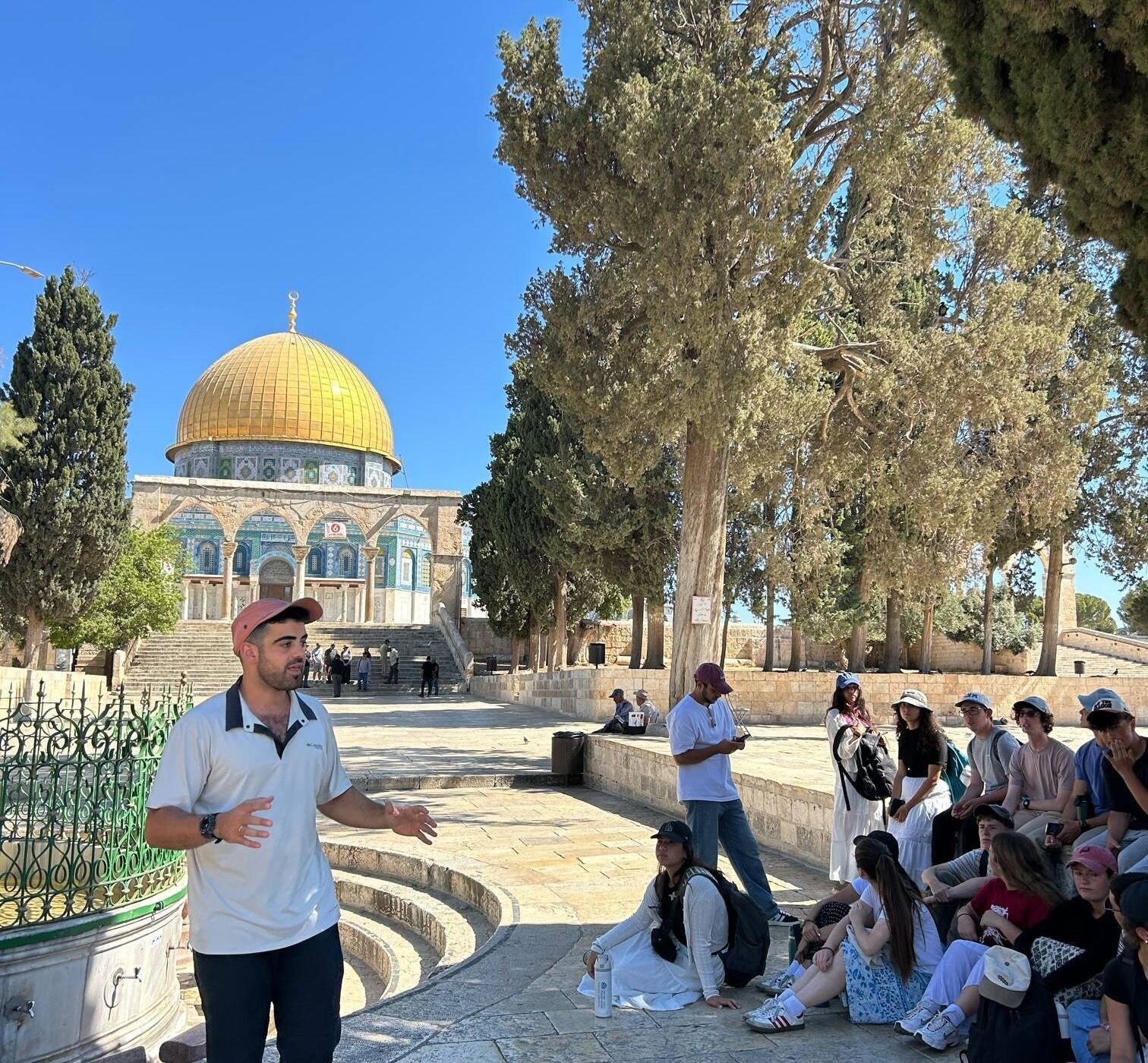
Traveling the three main quarters — Jewish, Muslim, and Christian — we explore the Old City through the perspectives of these religions, known as the Abrahamic religions. Why did Jerusalem become sacred to billions of people around the world, and why is the situation so complex?
Where does First Temple Jerusalem lie beneath our feet? How do we draw the line between eras in this layered city? A day in the streets of a place sacred to most of the world’s population.
How the day works
We start by ascending to the Dome of the Rock, getting a deep dive into the importance of the hill to all three religions.
The history is the easier half. The current reality is why people book this day: how the arrangements actually work, who controls what, which agreements are holding, where the friction is, and how a city this contested manages to function at all.
I do not run this as a comparative-religion lecture with everything smoothed flat. The three traditions make claims about this ground that cannot all be true at once, and pretending otherwise is both dishonest and less interesting. What I will do is present each one as its adherents understand it, and be straight about where the disputes lie.
Temple Mount / Haram al-Sharif
The most contested thirty-five acres on earth. The site of both Temples in Jewish tradition, of the binding of Isaac, and in Islam of the Prophet’s night journey and ascension. The Dome of the Rock, completed in 691, is among the oldest surviving Islamic buildings anywhere; al-Aqsa Mosque stands at the southern end.
Access is limited to specific hours, closed to non-Muslims on Fridays and Saturdays and during Ramadan, and subject to change at short notice. Non-Muslim prayer on the Mount is prohibited under the current arrangements, and that prohibition is itself one of the most contested questions in the country. Some observant Jews do not ascend at all, on halachic grounds. All of that gets explained rather than glossed over.
The Via Dolorosa
We walk the Via Dolorosa, the pilgrimage route for the Christian visitor who wants to walk Jesus’s last steps. The walk runs through the Muslim Quarter with its fourteen stations, and we talk about what happened at each step, how the route was fixed and by whom — the answer is more medieval and more contingent than most people expect.
The Church of the Holy Sepulchre
The traditional site of the crucifixion, burial and resurrection, and one of the strangest buildings in the world.
Six denominations share it — Greek Orthodox, Roman Catholic, Armenian Apostolic, Coptic, Syriac and Ethiopian — under a Status Quo arrangement frozen in place since 1853. It governs everything down to which lamp belongs to whom and who may sweep which step. The keys to the front door are held by two Muslim families, an arrangement dating back centuries.
It sounds like a curiosity. It is actually the clearest illustration in the city of how competing absolute claims get managed rather than resolved, which is the theme of the whole day.
The Arab and Jewish markets
The Old City is a place where people live and work, not only a set of holy sites. With all of this in mind we hop over to the Jewish Cardo and its art shops, then stroll the Arab market — a busy, crowded souk with the feel of Marrakech or Cairo.
Swapping options
Hurva Synagogue — The dramatic story of this famous synagogue, and a climb to the top for a 360° view of the Old City and the Temple Mount.
Second Temple sites — Beneath our feet in the Jewish Quarter are the original houses from the time of the Second Temple, two thousand years ago. Go back in time and see how those Jews once lived.
Machane Yehuda Market — Finish the day in Jerusalem’s legendary shuk, surrounded by its colors, smells, sounds and flavors.
Practical notes
A full day, roughly six to seven hours, walking throughout the Old City.
The Temple Mount decides the shape of the day. Access for non-Muslims is limited to short weekday windows, closed on Fridays and Saturdays and through Ramadan, and it can change at short notice. It goes first and the rest of the day flexes around it. Bring a passport.
Modest dress is required — shoulders and knees covered, for everyone — and no religious articles may be carried onto the Mount.
Old City stone throughout: uneven, sloped in places, with steps.
If the Mount is closed on the day, the alternatives are genuinely good and we use them: the Western Wall Tunnels beneath the platform, and the Southern Wall steps pilgrims actually climbed.
- Swapping options
- The Hurva Synagogue rooftop, the Second Temple-period houses beneath the Jewish Quarter, Machane Yehuda Market