Private day tour
Dead Sea & Judean Desert
Only 30 minutes from Jerusalem, we descend to the lowest place on earth: a sea no fish can live in, ancient fortresses, and a river to walk up at Ein Gedi. Routes adapt to your interests and the season.
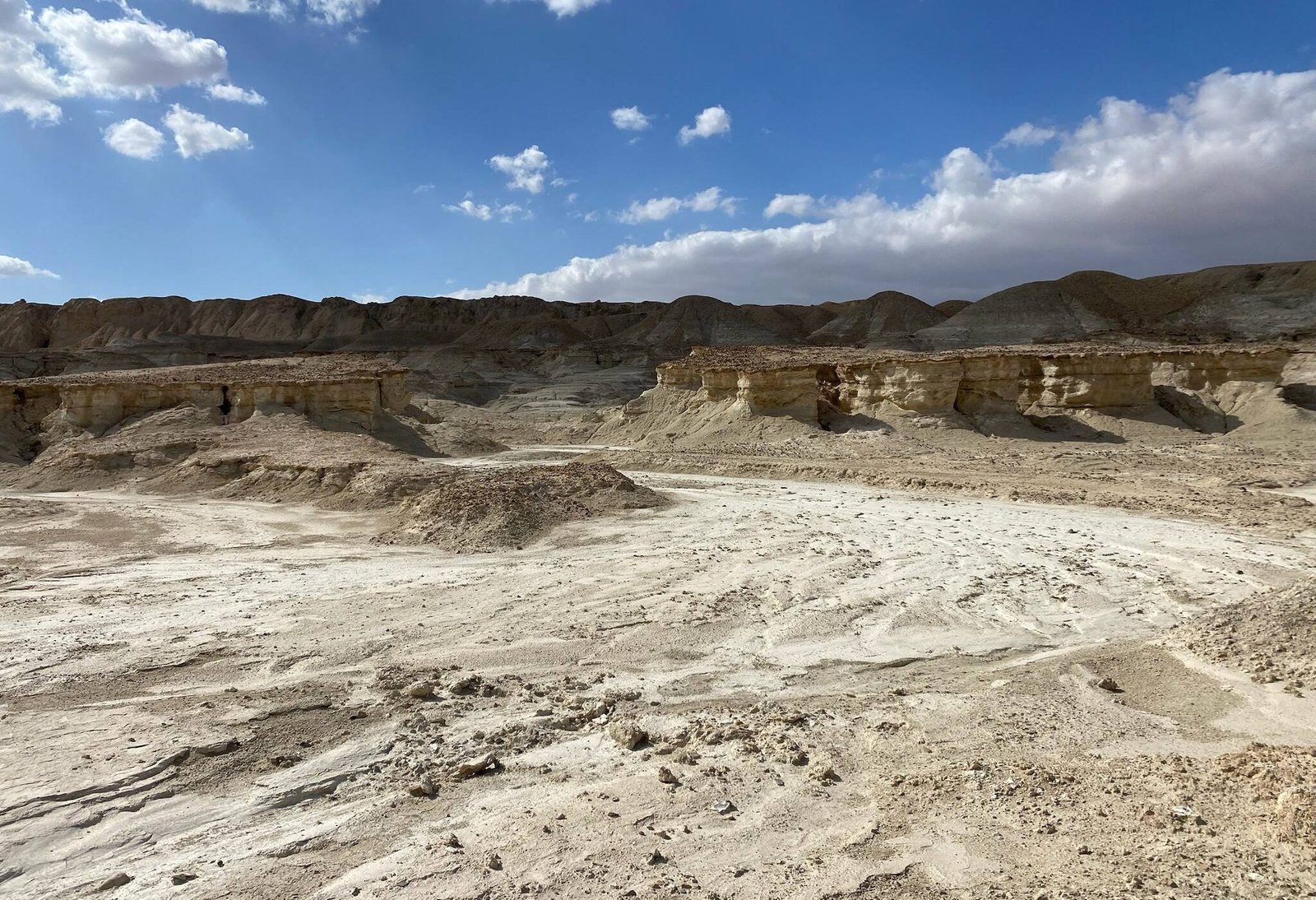
Routes can be adapted depending on your interests and the season.
Mitzpe Yericho
Enjoy an incredible view from my favorite overlook, on top of Jericho and the Jordan Valley. Hear the stories of the Jewish people entering the Land of Israel while enjoying the coffee cart on the ledge.
Masada National Park
Rise above the Judean Desert to one of Israel’s most dramatic ancient fortresses. Explore Herod’s cliffside palaces, hidden water systems, and the remains of the last Jewish stronghold against Rome, all overlooking the Dead Sea.
How you get up is a real choice. The cable car takes three minutes. The Snake Path is a good, elevating hike of 45 minutes to an hour with one of the most rewarding views in Israel — in summer only as a sunrise or sunset hike, in winter it is fine during the day.
Ein Gedi Nature Reserve
Walk into a desert oasis where waterfalls, wildlife, and freshwater springs appear between towering cliffs. This is the landscape where David hid from King Saul, and suddenly the biblical story feels very real. Right outside the park is an ancient synagogue with a fascinating story about a secret scent.
The Dead Sea
Finish at the lowest place on Earth and float effortlessly in its famously salty water. Surrounded by desert mountains, it’s one of those experiences that simply doesn’t exist anywhere else.
Swapping options
Because Masada is in a pretty isolated location, I would always recommend spending the whole day in the area and seeing other attractions — otherwise you may not see yourself back there and miss out on adventures. And if you have been to Masada and Ein Gedi before and feel you haven’t seen enough, another full day can be built from these:
Qumran and the Scrolls — Where a Bedouin shepherd found the first of the Dead Sea Scrolls in a cave in 1947. What came out of them pushed the oldest known Hebrew biblical manuscripts back by roughly a thousand years.
Nahal Prat Nature Reserve — Closer to Jerusalem, hike through one of Israel’s most beautiful desert oases, filled with flowing springs, waterfalls, and crystal-clear pools.
Museum of the Good Samaritan — An ancient building with six restored halls, originally a travelers’ inn in the Ottoman period. On display are archaeological remains, many brought in from Judea and Samaria.
The Balsam Garden — Visit a garden and the man who dedicated his life to reviving the famous balsam scents used in the First and Second Temple. Enjoy the smells and the tea.
Enot Tsukim Nature Reserve — Where crystal-clear springs meet the desert, creating a paradise that can only exist in the geographical conditions of this area.
The Og River hike — A circular hike with a few ladders to climb. Great fun in the colder seasons.
Practical notes
A full day, roughly eight to ten hours door to door.
Heat is the real constraint. Summer temperatures at the Dead Sea routinely exceed 40°C and there is no shade at Masada. Bring more water than you think you need, a hat and sunscreen. October to April is far more comfortable.
Bring swimwear, a towel and flip-flops — the shore is sharp salt crystal and rock. Do not shave that morning, and keep the water out of your eyes and mouth.
Masada has steps, uneven surfaces and exposure even via the cable car. Ein Gedi’s lower trail is manageable for most people; the upper canyon is a proper hike.
- Swapping options
- Qumran and the Scrolls, Nahal Prat, the Museum of the Good Samaritan, the Balsam Garden, Enot Tsukim, the Og River hike, a Bedouin experience