

Sea of Galilee
Not a sea and not especially large — 21km by 13km — but almost everything in the Gospels happens on or near its northern shore.
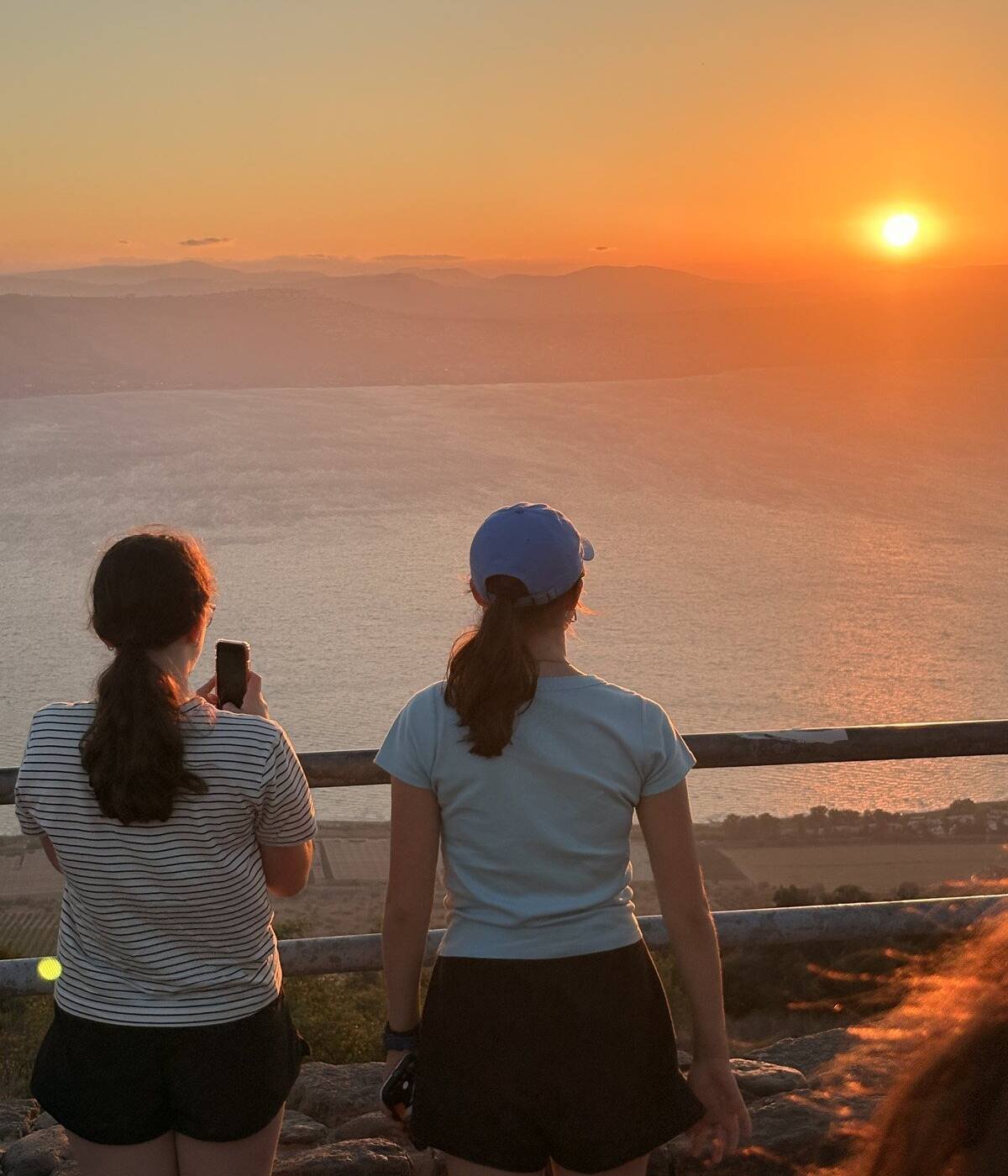
The Sea of Galilee is not a sea. It is a freshwater lake, about 21 kilometers long and 13 wide, sitting roughly 210 meters below sea level, the lowest freshwater lake on Earth, and the second-lowest lake of any kind after the Dead Sea just south of it.
That depression is the reason for almost everything else about the place: the heat, the sudden squalls, the fertility of the shoreline, and the fact that a first-century fishing economy could support a dozen towns within sight of one another.
Why the storms are real
Visitors often assume the storm accounts in the Gospels are literary. They are not. The lake sits in a bowl with the Golan Heights rising sharply to the east and the hills of Galilee to the west. Cool air spilling down those slopes hits warm, humid air sitting over the water, and the result arrives fast and from nowhere.
Local fishermen still treat the afternoon wind with respect. If you take a boat, morning is calmer.
What is actually on the shore
Capernaum, on the north shore, was the base of operations, described in Matthew as Jesus’s “own town.” The excavated synagogue there is fourth or fifth century, but it stands on the black basalt foundations of the first-century building that would have been standing at the time.
Tabgha, a few minutes west, holds the Church of the Multiplication with its fifth-century mosaic floor, including the well-known loaves-and-fishes panel. Next door, the Church of the Primacy of Saint Peter sits on the rock where tradition places the post-resurrection breakfast on the shore.
The Mount of Beatitudes rises just above them: a domed church from 1938 in a garden with what is probably the best single view of the lake. The traditional site of the Sermon on the Mount.
Magdala, on the western shore, is the newest and in some ways the most interesting. A first-century synagogue was uncovered here in 2009, along with a carved stone block now known as the Magdala Stone, showing a seven-branched menorah. It is one of very few synagogues confidently dated to the period, meaning it is a building the Gospel figures could plausibly have stood inside.
Tiberias, on the west, is the working town, founded around 20 CE by Herod Antipas and named for the emperor. It later became one of the four holy cities of Judaism and the place where the Jerusalem Talmud was compiled.
Across the water on the eastern side, the Kursi ruins mark the traditional site of the healing of the Gerasene demoniac, and the slope down to the water makes the account’s geography suddenly legible.
The boat, and the Boat
Two different things get called “the Jesus boat,” and it is worth separating them.
The first is the wooden boats that run tourist crossings between Ginosar and Capernaum. Pleasant, unhurried, and the only way to understand how small the lake is. You can see most of the significant sites from the middle of it.
The second is a genuine archaeological find. In 1986, during a severe drought that dropped the water level, two brothers from Kibbutz Ginosar found a fishing boat buried in the mud. Carbon dating and construction analysis placed it between roughly 100 BCE and 100 CE. It is about 8.2 meters long, held a crew of five, and is now conserved at the Yigal Allon Museum at Ginosar. It is not anyone’s boat in particular. It is simply the kind of boat, from the right century, on the right lake.
Practical notes
Most of the Christian sites cluster along the northern shore within a few kilometers, which makes them straightforward to combine. Capernaum, Tabgha and the Mount of Beatitudes can be walked between if you have the time and the weather is kind.
Modest dress is required at the churches and enforced at Capernaum in particular. Capernaum and Magdala charge admission; Tabgha and the Mount of Beatitudes ask a small parking fee.
Summer here is genuinely hot — being 210 meters below sea level does that — and there is little shade at the archaeological sites. Spring and autumn are far more comfortable, and the hillsides in February and March are green in a way that surprises people who expect desert.
The water is swimmable, and there are beaches around the lake. It is a lake, not a spa; the Dead Sea experience is a different trip entirely.
How much time it takes
The northern shore sites are a comfortable half day. Adding Magdala, Tiberias, or a boat crossing makes it a full one.
Galilee is roughly two hours’ drive from Jerusalem and about the same from Tel Aviv, which means a day trip is possible but tight. Staying a night in the area — Tiberias or one of the kibbutz guesthouses on the shore — turns a rushed circuit into something considerably better, and lets you see the lake at dawn, which is when it earns its reputation.